

Pure Orthodontics / FAQ
Most teens start somewhere between 11 and 14, once most or all of their adult teeth have come in. That window tends to give the best results, since there's still a bit of jaw growth left to work with, which usually means more efficient treatment than waiting until adulthood.
Most teens are in braces for 18 to 24 months. Mild cases can finish sooner, and more complex bites take longer, but the biggest factor is consistency: wearing any rubber bands as directed and keeping up with oral hygiene keeps treatment on schedule.
Many teens are good candidates for clear aligners, and options like Invisalign Teen even include wear indicators that fade over time, so parents can confirm they're actually being worn enough. That said, teens with more complex bite issues sometimes get better, more predictable results from traditional braces, since those don't rely on the patient remembering to put them back in.
Hard, sticky, and chewy foods are the main culprits, things like popcorn, caramel, gum, hard candy, nuts, and ice, since they can bend a wire or knock off a bracket. Crunchy foods like apples and carrots are usually fine as long as they're cut into smaller pieces instead of bitten into directly.
Not really, discomfort has more to do with how much a tooth is moving than the patient's age. Most teens describe mild soreness for a couple of days after an adjustment, easily managed with over-the-counter pain relief and softer foods for a bit.
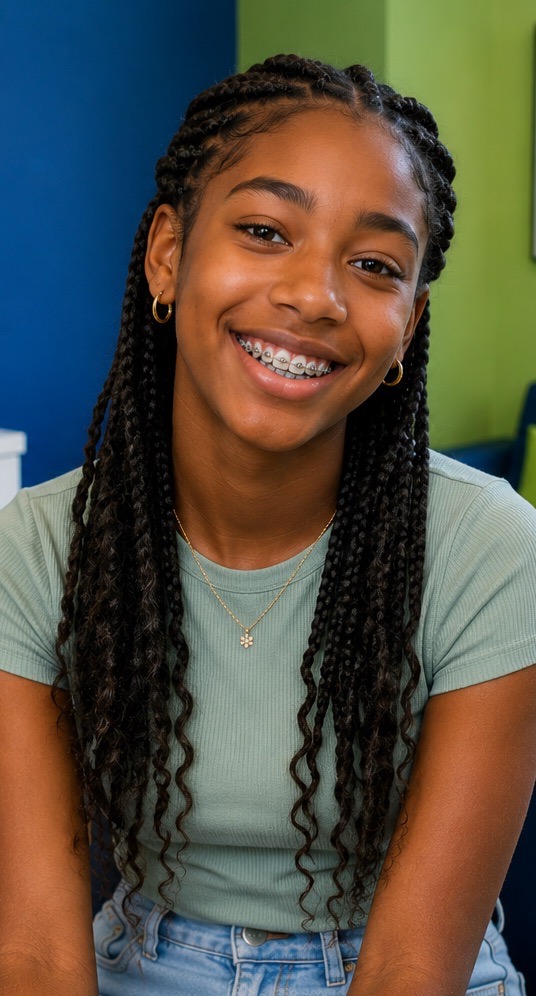
A lot of teens feel a little self-conscious at first, but braces are so common among peers that it rarely stays a big deal for long. Most teens end up genuinely happy with the result once treatment wraps up. For anyone who wants something less visible in the meantime, ceramic braces or clear aligners are worth asking about.
Yes, retainers are non-negotiable after braces. Without one, teeth naturally drift back toward their original position, a process orthodontists call relapse. Most teens wear a retainer full-time for a few months, then switch to nights only, usually for the long haul, since teeth can keep shifting slightly throughout life.
Absolutely, though a custom mouthguard is a smart idea for contact sports to protect both the braces and the inside of the mouth. Musicians who play wind instruments sometimes need a short adjustment period to get used to playing with brackets in the way, but it doesn't usually last long.