

Pure Orthodontics / FAQ
Yes. Some overlap between the upper and lower front teeth is normal and desirable. An overbite becomes a concern when the vertical overlap is excessive or begins affecting the teeth, gums, bite or function.
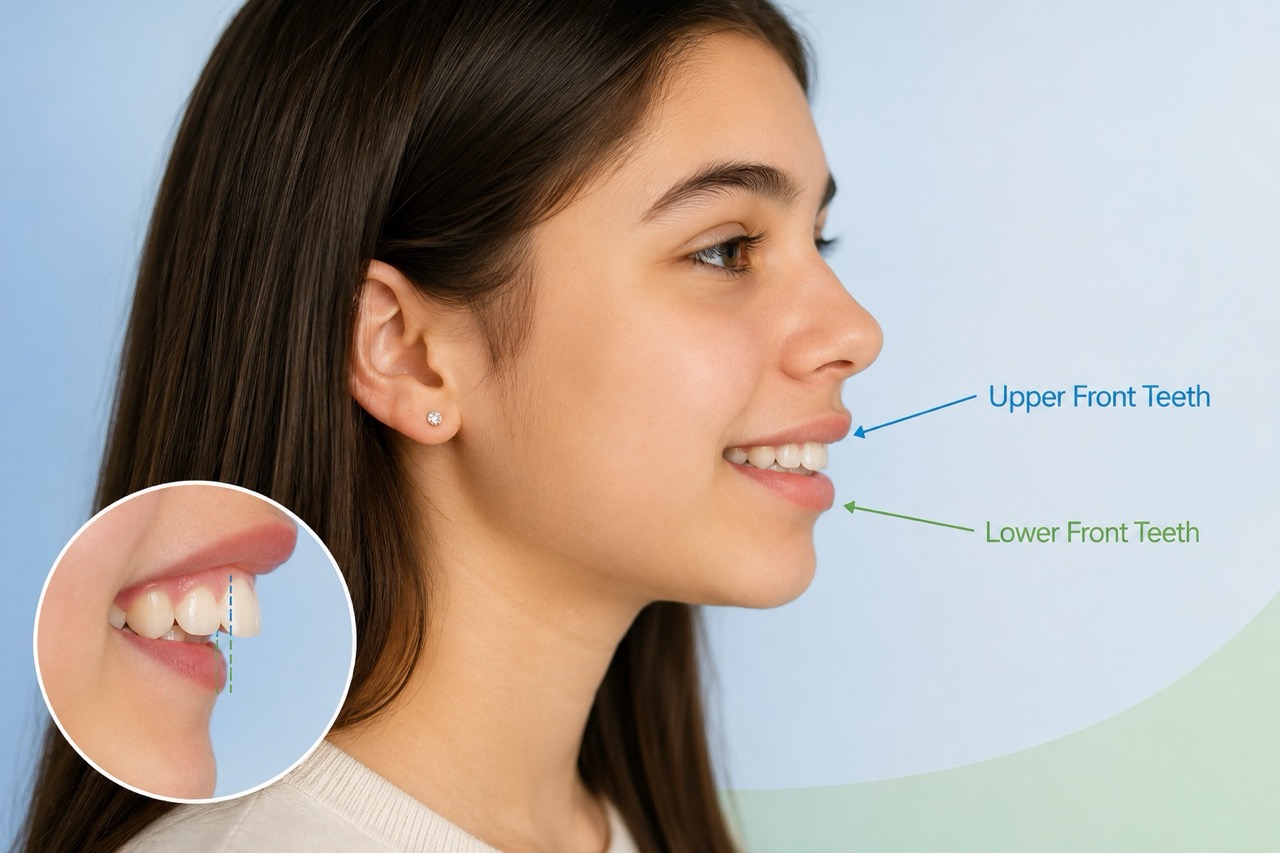
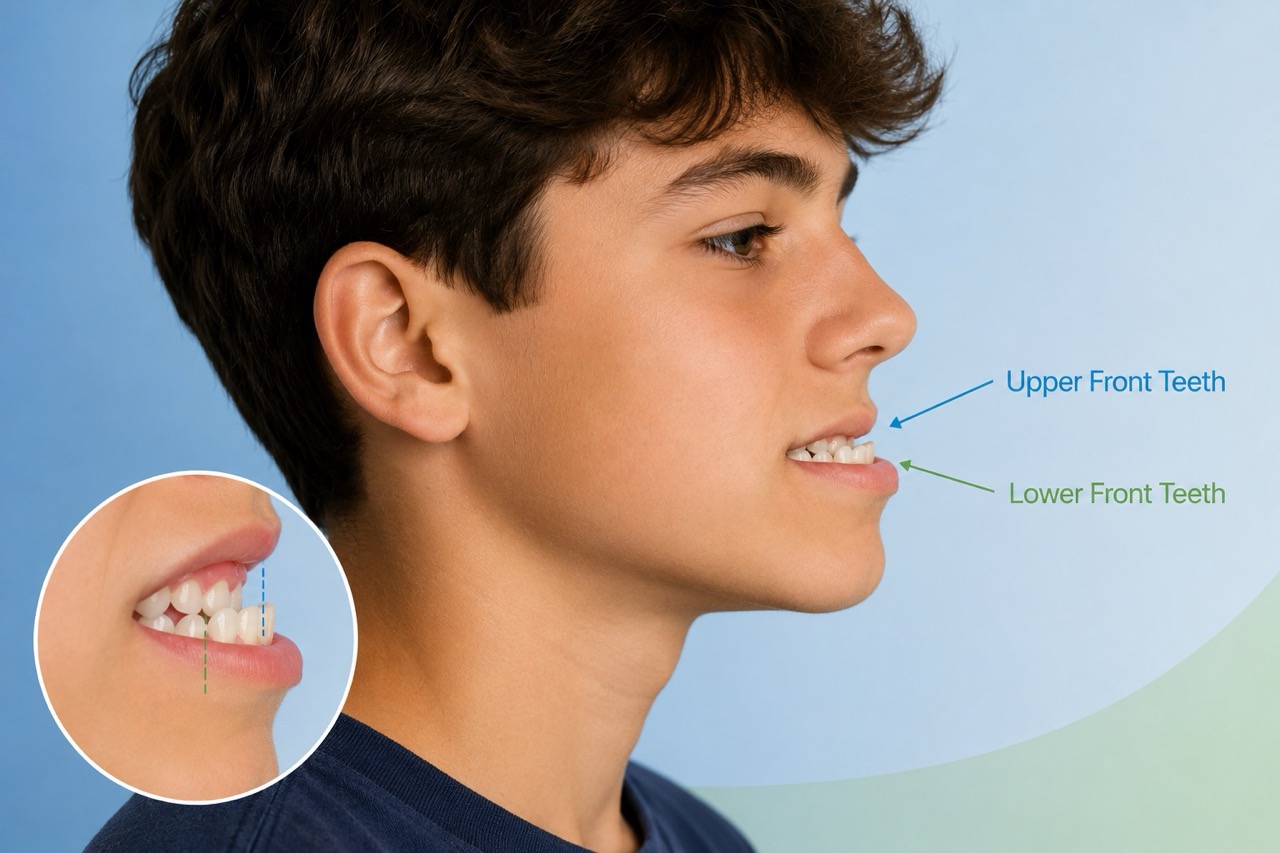
No. These terms are often confused. An overbite describes vertical overlap, meaning how far the upper teeth cover the lower teeth from top to bottom. An overjet describes horizontal projection, meaning how far the upper front teeth sit in front of the lower teeth.
It can. Teeth naturally shift throughout life, and tooth wear, missing teeth, gum changes and other factors can alter the bite over time. However, not every overbite will progressively worsen.
A deep overbite can place excessive contact on certain teeth. Over time, this may contribute to worn or chipped tooth surfaces, particularly when the lower front teeth contact the backs of the upper teeth.
An overbite can influence how the teeth and jaws function, but jaw pain has many possible causes. Having an overbite does not automatically mean it is responsible for TMJ symptoms or jaw discomfort.
There is no single treatment timeline. Mild cases may require relatively limited correction, while significant overbites accompanied by crowding, jaw discrepancies or other bite concerns may require more comprehensive treatment.
Sometimes. Clear aligners can treat many overbites, and growing children may benefit from other orthodontic appliances depending on the cause of the bite problem. An orthodontic examination is the best way to determine which options are appropriate.
Yes. A more pronounced overbite can affect how the upper and lower teeth align, which may influence the appearance of your smile and overall facial profile. Correcting an overbite can create a more balanced bite while improving tooth alignment and smile aesthetics.

A noticeable overbite may make the upper front teeth appear to cover most or even all of the lower front teeth when the teeth are together. You might also notice that:
Treatment focuses on changing the relationship between the upper and lower teeth so they come together more appropriately.
Depending on the individual, this may involve moving the front teeth, changing the position of the back teeth, creating additional space, guiding jaw development in a growing patient, or a combination of these approaches.
The right treatment depends on why the overbite exists, not simply how it looks.