





Select Your Location
Langley
8411 200 St #105
Langley Twp, BC V2Y 0E7
Langley
Text Us
236-239-3617
Text Us Book Now
Burnaby
7255 Kingsway
Burnaby, BC V5E 1G5
Burnaby
Text Us
236-246-6689
Text Us Book Now
North Edmonton
15371 37 St NW
Edmonton, AB, T5Y 0S5
North Edmonton
Text Us
587-800-0751
Text Us Book Now
West Edmonton
1014 Webber Greens Dr NW
Edmonton, AB, T5T 4K5
West Edmonton
Text Us
587-410-0285
Text Us Book Now
South Edmonton
1048 91 St SW
Edmonton, AB, T6X 0P2
South Edmonton
Text Us
587-416-0051
Text Us Book Now
Leduc
3610 Rollyview Rd
Leduc, AB, T9E 1C9
Leduc
Text Us
587-207-5708
Text Us Book Now
Red Deer
6 Clearview Market Way
Red Deer, AB, T4P 0M9
Red Deer
Text Us
825-500-5143
Text Us Book Now
Book Now

What Is an Underbite?

An underbite is a bite misalignment where the lower teeth sit in front of the upper teeth instead of behind them. Orthodontists sometimes call this a Class III bite or Class III malocclusion. The cause varies from person to person. Some underbites come down to tooth position. Others trace back to how the upper and lower jaws grew relative to each other. Many are a mix of both. Knowing the actual cause matters, because it's what determines which treatment will actually work.


TESTIMONIALS

35,000+ Happy Patients

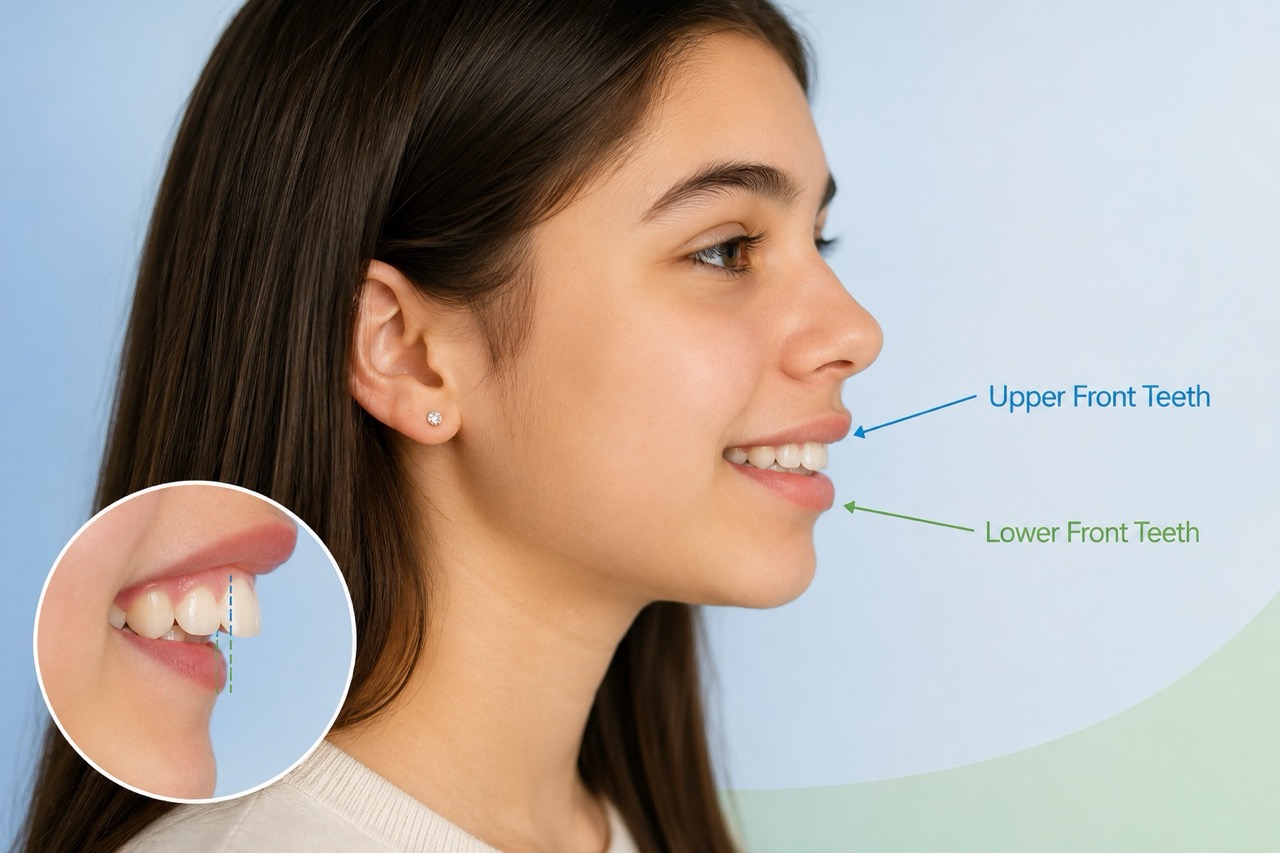
Overbite

An overbite occurs when the upper front teeth overlap the lower teeth too much. Orthodontic treatment can improve alignment, bite function, and tooth wear.

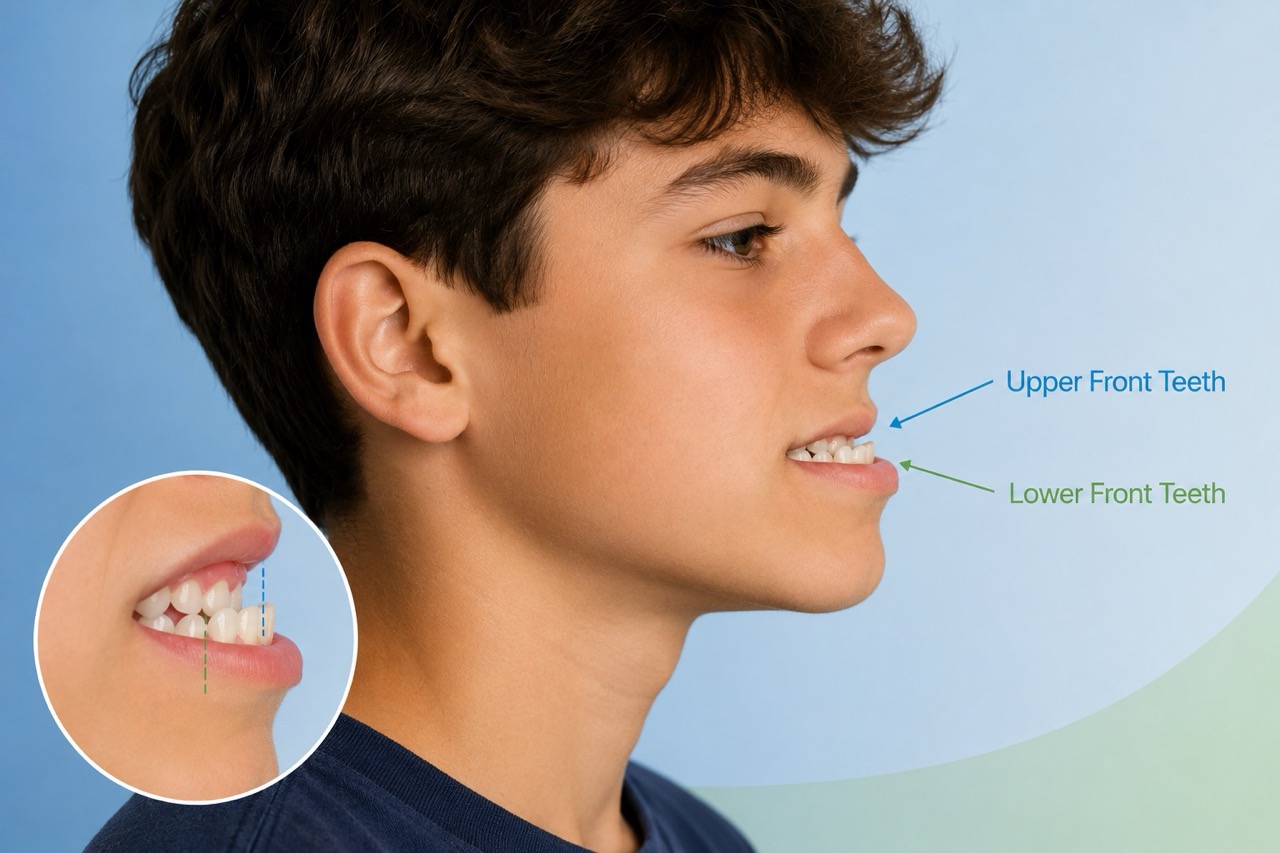
Underbite

An underbite occurs when the lower teeth sit in front of the upper teeth. Treatment can improve chewing, jaw alignment, and overall bite function.

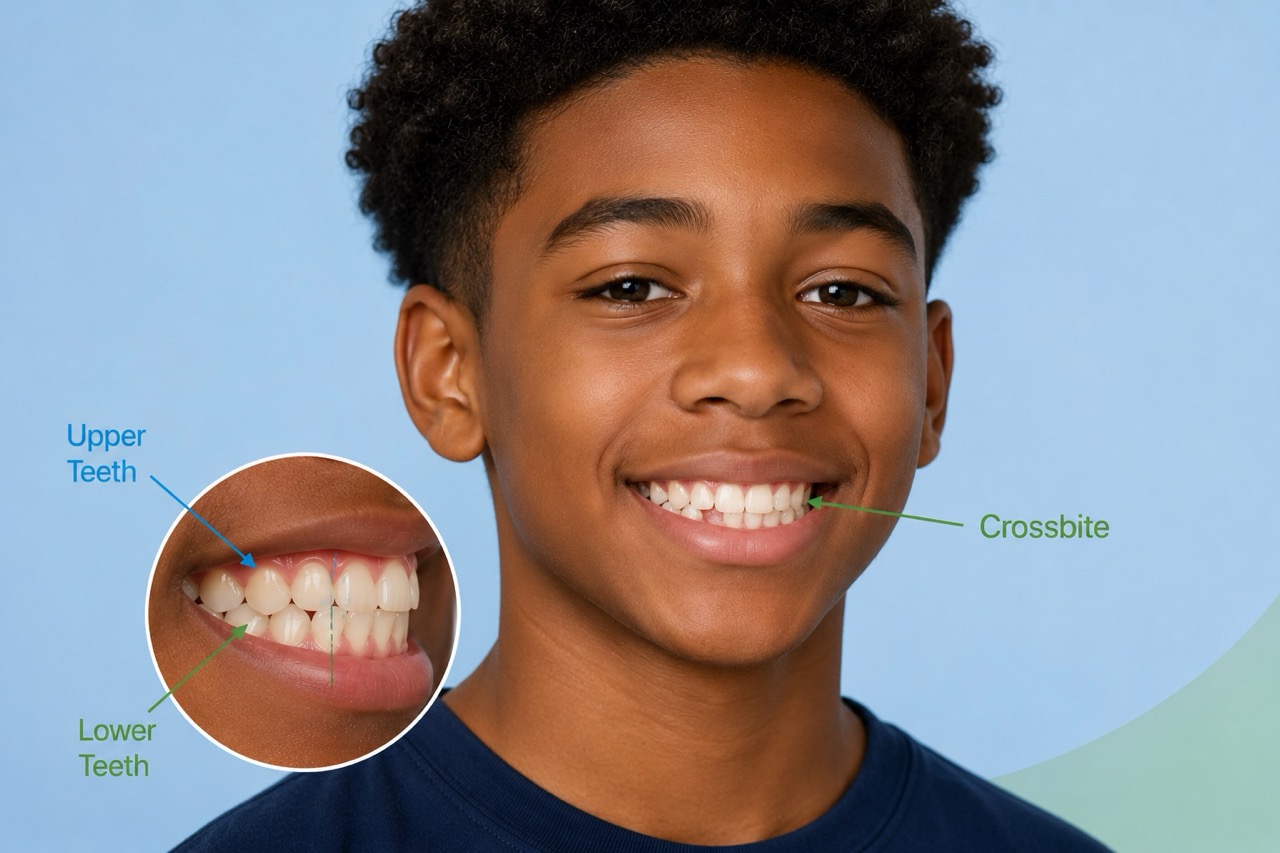
Crossbite

A crossbite occurs when upper teeth bite inside the lower teeth. Orthodontic treatment can correct alignment and help prevent uneven wear and jaw problems.
BOOK ONLINE
Pure Orthodontics — Early Treatment FAQ

Pure Orthodontics / FAQ

Underbite questions, answered.

Underbites can have a strong genetic component. Jaw size, jaw position, facial development, and tooth alignment can all be influenced by genetics, which is why underbites may sometimes appear in several members of the same family.

An underbite can become more noticeable as a child grows, particularly when differences in upper and lower jaw growth are involved. In adults, changes in tooth position, tooth wear, or dental health can also affect how the bite fits together over time.

It can. Teeth naturally shift throughout life, and tooth wear, missing teeth, gum changes and other factors can alter the bite over time. However, not every overbite will progressively worsen.

There is no single best age for every underbite. Children with an underbite should be assessed while they are still growing so an orthodontist can determine whether early treatment would be beneficial. Other cases may be better treated later when more permanent teeth have erupted.

Not exactly. An underbite generally describes a bite where the lower front teeth sit ahead of the upper front teeth. A crossbite occurs when one or more upper teeth sit inside the lower teeth and can affect the front teeth, back teeth, or both.

Yes. Many underbites can be treated without jaw surgery, particularly when tooth position is a major contributor or treatment begins while a patient is still growing. Surgery may be considered for some severe skeletal underbites in adults.

Treatment time varies depending on the severity of the underbite, the patient's age, the underlying cause, and whether other orthodontic concerns need to be corrected. An orthodontic assessment is needed to provide an accurate treatment timeline.

A significant underbite may contribute to uneven tooth wear, difficulty biting or chewing, and increased stress on certain teeth. However, every bite is different, and an orthodontist can determine whether treatment is recommended.

What Causes an Underbite?

Most underbites come from genetics, jaw growth, tooth position, or some combination of the three. A lower jaw that grows too far forward, an upper jaw that develops differently, or teeth that erupt at odd angles can all push the lower teeth ahead of the uppers. An orthodontic exam is the only reliable way to pin down the cause and severity.

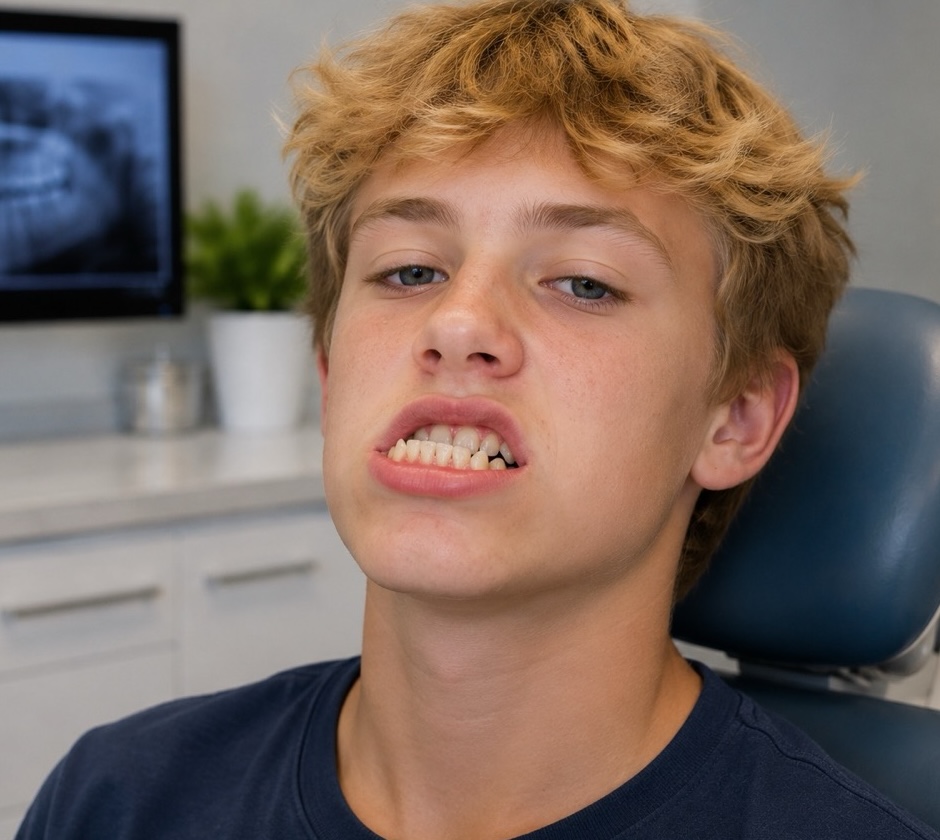
What Does an Underbite Look Like?

The clearest sign is the bite itself: the lower front teeth sit in front of the upper front teeth, instead of tucking slightly behind them like they normally would. It can be barely noticeable or dramatic enough to change the profile of the face, often making the lower jaw look more prominent and the chin appear to jut forward. Other signs include the lower jaw extending past the upper jaw from the side, a sunken look to the upper lip, trouble getting the front teeth to meet, and uneven tooth wear. Since underbites vary widely in cause and severity, an orthodontic evaluation is the best way to know what's really going on.

FREE CONSULTATION

Does an Underbite Need to Be Treated?

Treatment depends on whether the issue is mainly the teeth, the jaws, or both. An orthodontist might reposition teeth, create space, use elastics or other appliances, guide jaw growth in a still-developing patient, or combine several of these strategies. In adults, more severe skeletal underbites often need a different approach, since jaw growth has already finished by that point.

FREE CONSULTATION
linkedin facebook pinterest youtube rss twitter instagram facebook-blank rss-blank linkedin-blank pinterest youtube twitter instagram