





Select Your Location
Langley
8411 200 St #105
Langley Twp, BC V2Y 0E7
Langley
Text Us
236-239-3617
Text Us Book Now
Burnaby
7255 Kingsway
Burnaby, BC V5E 1G5
Burnaby
Text Us
236-246-6689
Text Us Book Now
North Edmonton
15371 37 St NW
Edmonton, AB, T5Y 0S5
North Edmonton
Text Us
587-800-0751
Text Us Book Now
West Edmonton
1014 Webber Greens Dr NW
Edmonton, AB, T5T 4K5
West Edmonton
Text Us
587-410-0285
Text Us Book Now
South Edmonton
1048 91 St SW
Edmonton, AB, T6X 0P2
South Edmonton
Text Us
587-416-0051
Text Us Book Now
Leduc
3610 Rollyview Rd
Leduc, AB, T9E 1C9
Leduc
Text Us
587-207-5708
Text Us Book Now
Red Deer
6 Clearview Market Way
Red Deer, AB, T4P 0M9
Red Deer
Text Us
825-500-5143
Text Us Book Now
Book Now

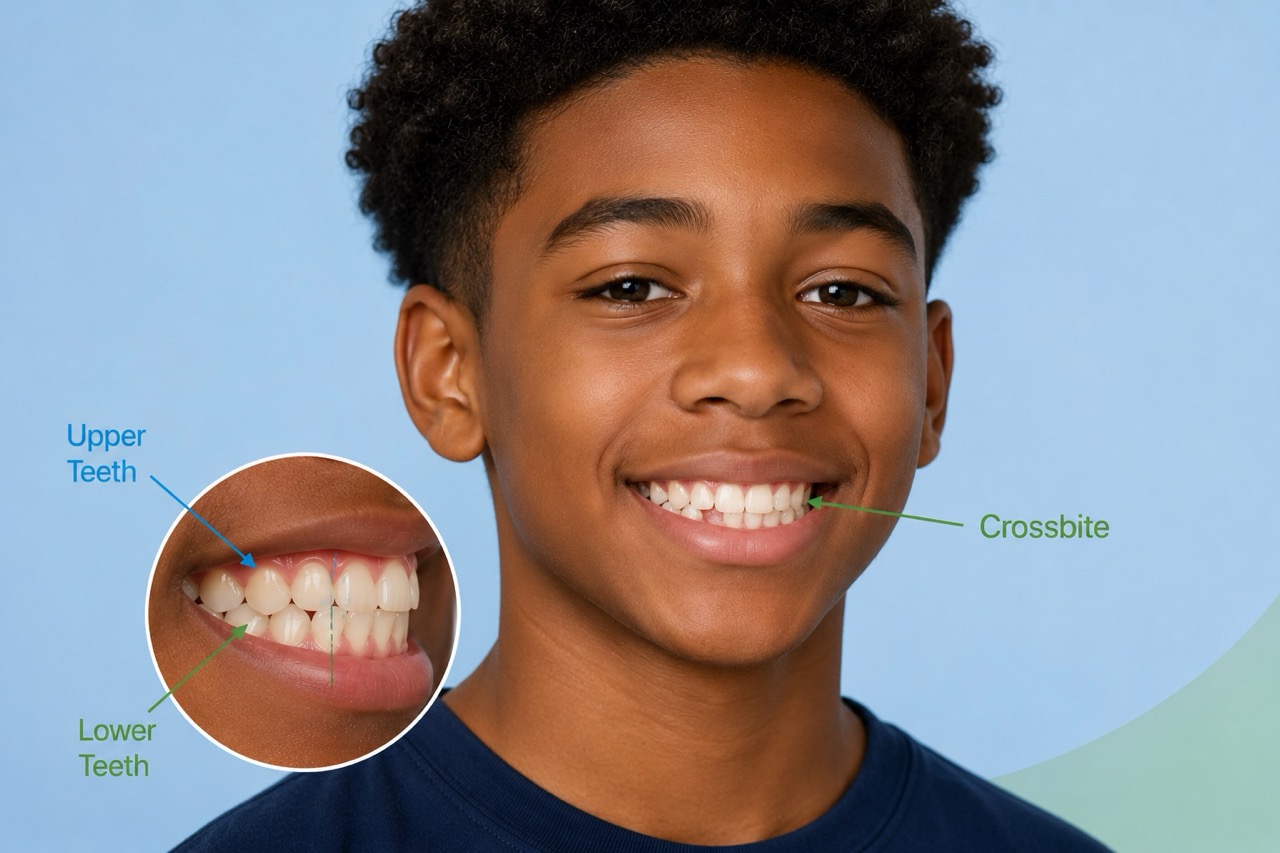
What Is a Crossbite?

A crossbite happens when one or more upper teeth sit inside the lower teeth instead of outside them, the way a normal bite is arranged. It can involve the front teeth, the back teeth, or both, and it's one of the more common bite problems orthodontists treat. Crossbites can affect children, teens, and adults. Left untreated, they can lead to uneven tooth wear, jaw strain, and changes in facial growth, which is why most orthodontists recommend addressing them sooner rather than later.


TESTIMONIALS

35,000+ Happy Patients

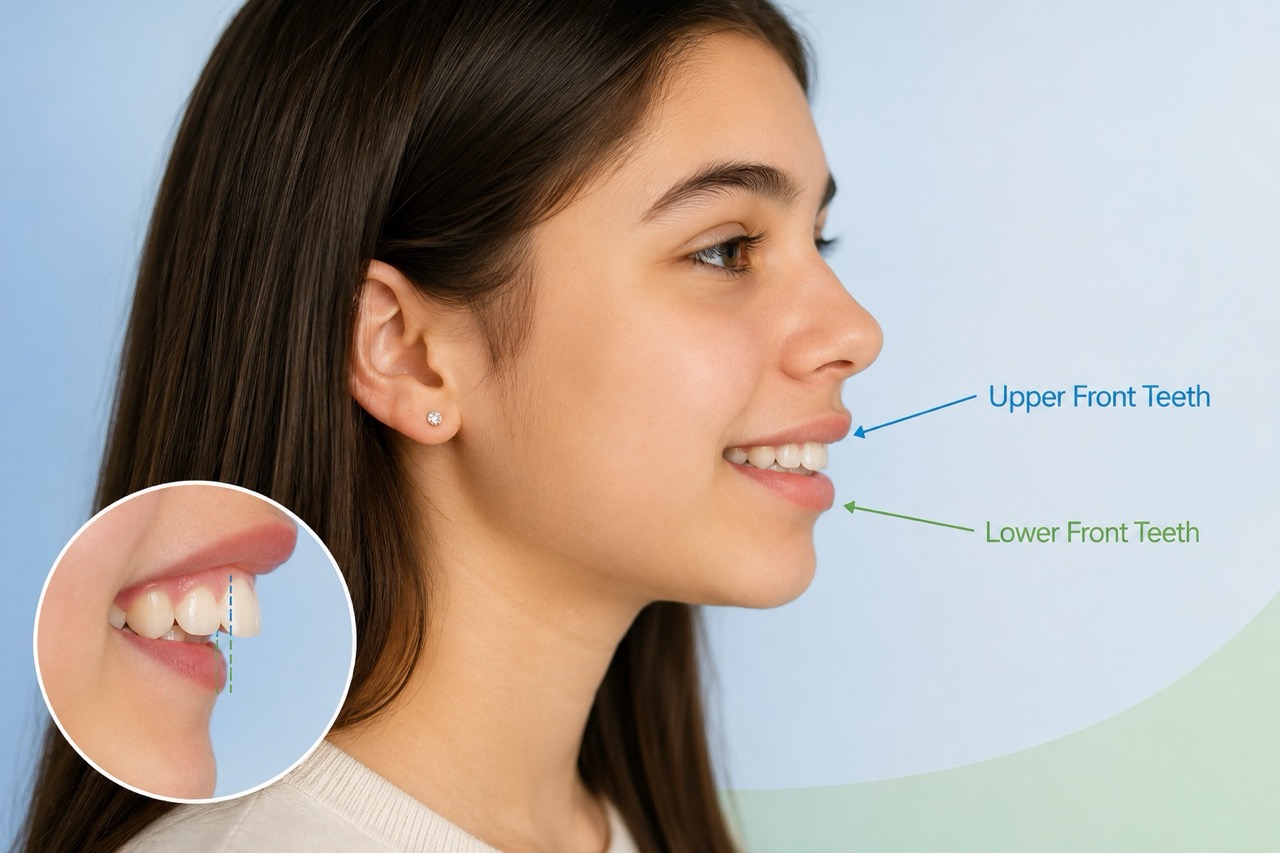
Overbite

An overbite occurs when the upper front teeth overlap the lower teeth too much. Orthodontic treatment can improve alignment, bite function, and tooth wear.

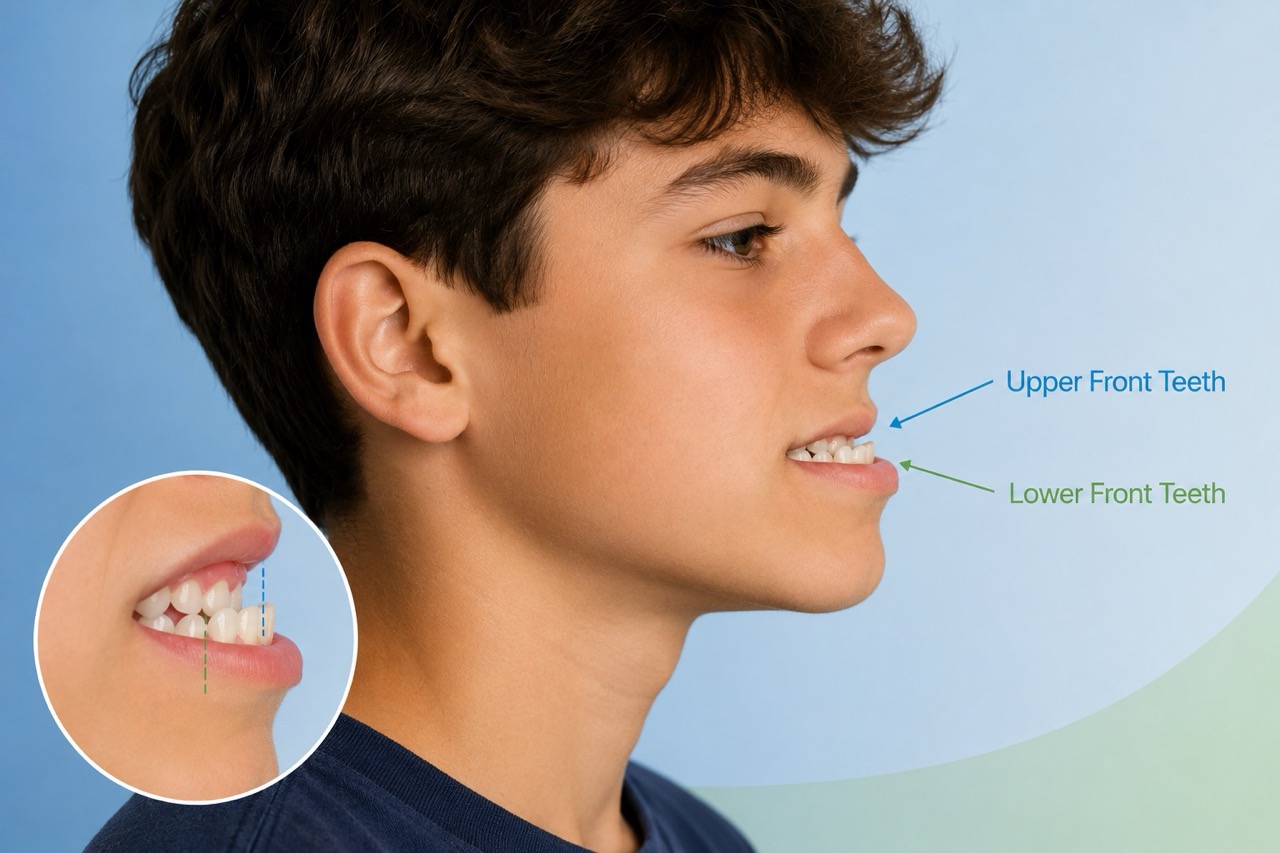
Underbite

An underbite occurs when the lower teeth sit in front of the upper teeth. Treatment can improve chewing, jaw alignment, and overall bite function.

Crossbite

A crossbite occurs when upper teeth bite inside the lower teeth. Orthodontic treatment can correct alignment and help prevent uneven wear and jaw problems.
BOOK ONLINE
Pure Orthodontics — Early Treatment FAQ

Pure Orthodontics / FAQ

Crossbite questions, answered.

Invisalign and other clear aligners can treat certain mild to moderate crossbites, particularly when tooth position is the main cause rather than jaw width. Attachments or elastics are sometimes used alongside aligners to help correct the bite. More significant crossbites, especially those caused by a narrow jaw, may need palatal expansion or other treatment before or instead of aligners. An orthodontic consultation can determine whether Invisalign is a good fit for your bite.

Yes, it often does. A crossbite typically doesn't correct itself, and over time it can lead to uneven tooth wear, gum problems, jaw discomfort, and in some cases changes in facial symmetry.

Many orthodontists recommend evaluating a crossbite as early as possible, often around age 7, since a narrow jaw is generally easier to widen while a child is still growing. That said, crossbites can be treated at any age with the right approach.

There is no single best age for every underbite. Children with an underbite should be assessed while they are still growing so an orthodontist can determine whether early treatment would be beneficial. Other cases may be better treated later when more permanent teeth have erupted.

No. A crossbite means one or more upper teeth sit inside the lower teeth, which can affect the front teeth, back teeth, or both. An underbite specifically means the lower front teeth sit ahead of the upper front teeth.

Yes, in most cases. Many crossbites, especially in children and teens, can be corrected with a palatal expander, braces, or clear aligners. Surgery is generally reserved for severe skeletal crossbites in adults whose jaws have finished growing.

It depends on the type of crossbite, the patient's age, and whether jaw expansion is needed. An orthodontic evaluation is the best way to get an accurate timeline for your specific case.

An untreated crossbite can lead to uneven tooth wear, gum recession, jaw pain, and a bite that shifts to one side. In children, it can also affect how the jaw develops over time. Every case is different, so it's worth having an orthodontist assess whether treatment is needed.

What Causes a Crossbite?

Crossbites are usually caused by a narrow upper jaw, tooth position, or a combination of both. A jaw that hasn't developed enough width can cause the upper teeth to sit inside the lower teeth. Crowding, delayed loss of baby teeth, thumb sucking, and prolonged pacifier use can also affect how the teeth erupt and lead to a crossbite. An orthodontic exam can determine the specific cause and how severe it is.

What Does a Crossbite Look Like?

The clearest sign is how the teeth line up when biting down: one or more upper teeth sit inside the lower teeth instead of outside them. A front crossbite can look similar to an underbite in the front of the mouth, though the two are different problems. A back crossbite may be harder to notice without a dental exam, since it happens further back in the mouth. Some people also develop a facial asymmetry or a jaw that shifts to one side when biting down, which is often a sign the crossbite is affecting jaw function.

FREE CONSULTATION

Does a Crossbite Need to Be Treated?

Most orthodontists recommend treating a crossbite rather than leaving it alone, since it rarely resolves on its own and can affect more than just the appearance of the smile. An untreated crossbite can cause uneven tooth wear, gum recession on certain teeth, jaw pain, and a bite that shifts to one side. In growing children, an unaddressed crossbite can also influence how the jaw develops, sometimes leading to facial asymmetry over time.

FREE CONSULTATION
linkedin facebook pinterest youtube rss twitter instagram facebook-blank rss-blank linkedin-blank pinterest youtube twitter instagram